Two wheels solve a lot of campus problems. Parking is cheaper, a scooter fits where a car does not, and a small motorcycle costs less to run than almost anything with four wheels. What students rarely look at before buying one is that Texas sorts these machines into legal categories with very different rules, and the category your vehicle falls into changes where you may ride it, what you must wear, and what happens after a collision.
Texas Draws a Hard Line Between a Scooter and a Motorcycle
What counts as a motor-assisted scooter
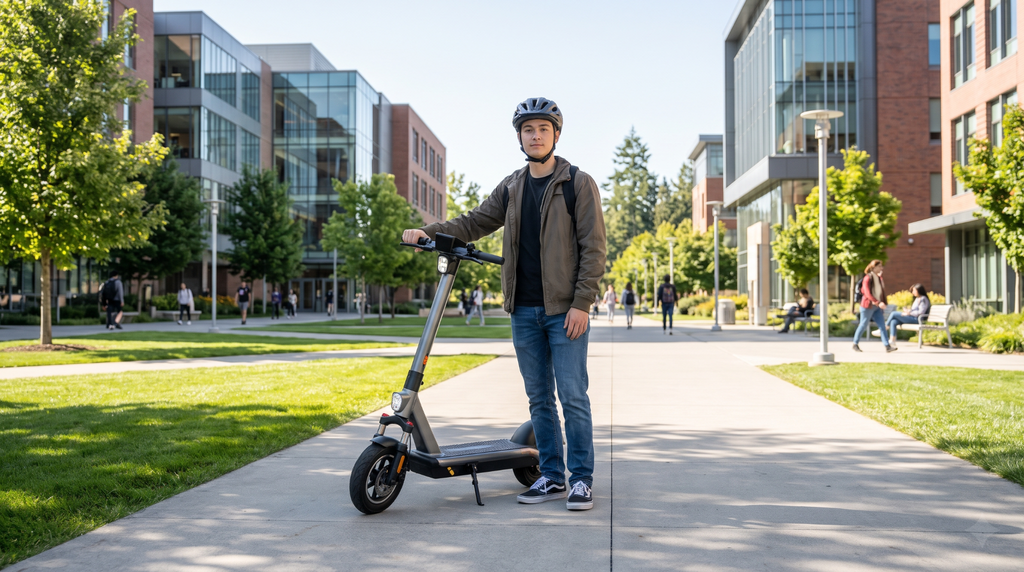
The definition in Chapter 551 of the Transportation Code is narrow and specific. A motor-assisted scooter is a self-propelled device with at least two wheels touching the ground during operation, a braking system able to stop it under typical conditions, a gas or electric motor not exceeding forty cubic centimeters, a deck designed to let a person stand or sit, and the ability to be propelled by human power alone.
That last requirement does more work than people expect. A device you cannot move by pushing with your feet is not a motor-assisted scooter under this definition, whatever the seller called it.
Where the law allows them
The same chapter permits a motor-assisted scooter on a street or highway only where the posted speed limit is thirty-five miles per hour or less, though it may cross a faster road at an intersection. It may be used on a path set aside for bicycles or on a sidewalk, and except as otherwise provided, the rules that apply to bicycles apply to it. Counties and municipalities may prohibit scooter operation on specific streets or sidewalks in the interest of safety, which is why campus and city rules differ block to block.
Anything larger is treated as a motorcycle
Exceed those limits, and you are operating a motorcycle, which brings licensing, registration, financial responsibility, and helmet rules with it.
According to personal injury lawyer Nicholas R. Thompson, Principal and Managing Partner at RTRLAW, the classification of the machine frequently shapes the claim before anyone discusses fault, because it determines which operating rules the rider was subject to at the moment of the collision. Riders hurt on two wheels often speak with a Houston motorcycle legal support for that reason, since the fault discussion in these cases starts from a different place than it does in an ordinary car case.
The Helmet Rule Is Not What Most Riders Think
Under Section 661.003, it is an offense to operate or ride as a passenger on a motorcycle on a public street without protective headgear meeting state safety standards, and an offense to carry a passenger who is not wearing it.
There is an exception, and it is widely misdescribed as a simple adult opt-out. It applies only if the person is at least twenty-one years old and either has completed an approved motorcycle operator training and safety course or is covered by a health insurance plan providing medical benefits for injuries from a motorcycle collision.
Why this matters particularly for students
A rider who is twenty is outside the exception entirely, regardless of training or insurance. For riders who are twenty-one or older, the insurance route depends on the coverage actually being in force, which is worth confirming rather than assuming if you are on a student plan or recently aged off a family policy. Helmet use also tends to surface in injury claims less as a ticket than as an argument about damages, with the other side suggesting the rider’s own choices increased the harm.
What to Do in the First Hour After a Crash
Get it reported even if it seems minor
Riders routinely decline a report for a low-speed fall, then discover a week later that a wrist is fractured and there is no record that anyone else was involved. A report creates the baseline document.
Photograph more than the damage
Capture the road surface, any gravel or fluid, sight lines at the intersection, the position of both vehicles and the other driver’s plate. Motorcycle cases turn on visibility and road conditions more often than car cases do.
Say less than you want to at the scene
Adrenaline masks injury, and an assurance that you are fine becomes a quotation in an adjuster’s file.
Two Rules That Shape Every Texas Claim
Texas allocates responsibility by percentage. A jury assigns shares among everyone whose conduct contributed, the award is reduced by the injured person’s share, and a claimant found more than fifty percent responsible recovers nothing. In motorcycle cases the defense predictably argues speed, lane position and conspicuity to push that percentage up.
The filing deadline for most personal injury claims is two years from the date the cause of action accrues. Treatment that stretches across a semester does not extend it, and neither does an ongoing conversation with an insurer.
Before You Ride Again
Confirm which category your machine actually falls into rather than which one the listing claimed. Check whether your route keeps you on roads where a scooter is permitted. If you are relying on the health insurance route around the helmet rule, verify that the plan covers motorcycle injuries, since not every plan does.